
The Truth About Postbiotics: Why Gut Health Experts Are Talking About This New Discovery
Are you trying to understand the difference between prebiotics, probiotics, and postbiotics? Many people are familiar with prebiotics and probiotics, but postbiotics are the latest addition to the gut health world that experts are starting to focus on.
Postbiotics come from probiotic bacteria after they go through fermentation . Unlike probiotics, they don’t have to be alive to work in your body. They provide health benefits similar to probiotics but may cause fewer side effects. They also last longer and are more stable than live bacteria.
What sets postbiotics apart is how they benefit your body. They protect your gut lining, which helps lower the chance of leaky gut syndrome.
They also have properties that ease inflammation, which can help with issues like IBS or skin conditions like eczema. On top of that, they make it easier for your body to absorb nutrients helping with energy and maintaining hormone balance. This article will explain what postbiotics are how they are different from the more familiar probiotics, and the ways they can boost your health.
What are postbiotics and how are they different?
The gut health world has recently introduced a new member to the biotic family: postbiotics. If you’re trying to understand the difference between prebiotic vs probiotic vs postbiotic, here’s a simple breakdown.
What are postbiotics and how are they different?
Postbiotics are defined as “preparations of inanimate microorganisms and/or their components that confer a health benefit on the host” [1]. This scientific definition was established in 2021 by the International Scientific Association for Probiotics and Prebiotics (ISAPP).
Think of these three biotics as a team with different roles:
-
Prebiotics are fibers that feed good bacteria in your gut
-
Probiotics are living microorganisms that benefit your health
-
Postbiotics are beneficial compounds created after microbes die
Essentially, postbiotics include inactive bacterial cells, their fragments, or substances they produced during their lifetime [2]. These components still provide health benefits even though they’re no longer alive.
Why postbiotics don't need to be alive
For years, scientists thought bacterial cells needed to be alive to benefit your health. Now, research shows that even dead microorganisms can help you [3].
When bacteria are inactivated (killed), they still contain parts that interact with your body, particularly your immune system [4].
These parts remain whether the cell is alive or dead. Furthermore, heat-killed probiotics can contain inactive bacterial cells and/or metabolites that effectively support your gut health. The concept of postbiotics opens doors for using microbes that couldn’t be given live due to safety concerns [1]. This means more options for improving your gut health.
Are postbiotics safer than probiotics?
Since postbiotics can’t replicate in your gut, they present fewer risks than probiotics [5]. This makes them a safer choice for people with weak immune systems or those who are seriously ill [6].
Probiotics must remain alive to work, which creates challenges. They need refrigeration, have shorter shelf lives, and can potentially cause infections in vulnerable people [7]. Postbiotics solve these problems since they don’t need to be alive.
Moreover, postbiotics eliminate concerns about transferring antibiotic resistance genes or virulence factors that can occur with live probiotics. This makes them particularly valuable for children with immature immune systems [2].
Despite these advantages, postbiotics still require safety testing before use – they can’t simply be presumed safe based on their living counterparts.
How postbiotics work in the body
When you consume foods with postbiotics or take postbiotic supplements, these beneficial compounds get to work right away in your body. Postbiotics have several ways they help keep you healthy—all without needing to be alive like probiotics.
Short-chain fatty acids and gut lining
One of the most important postbiotics is a group called short-chain fatty acids (SCFAs). The main ones are butyrate, propionate, and acetate. These are made when good bacteria in your gut break down fiber from your food [8].
These SCFAs act like superheroes for your gut! First, they help make your gut wall stronger by improving the tight connections between cells [9]. This helps stop bad stuff from leaking through your intestine wall into your bloodstream [10].
Butyrate, especially, gives energy to the cells that line your colon. Without enough butyrate, these cells can get weak and even start eating themselves for energy [11]. Consequently, having enough SCFAs keeps your gut lining healthy and working well.
Immune system modulation
Postbiotics are like teachers for your immune system. They help train it to respond correctly to different threats.
These compounds talk directly to your immune cells through special receptors. They affect how your body makes different types of T cells (important immune cells). For example, butyrate helps create more regulatory T cells that keep your immune system from overreacting.
Postbiotics can also make your gut produce more protective substances like mucins and antimicrobial proteins. These help defend against harmful germs. Notably, some postbiotics even help your gut make neurotransmitters like serotonin, which affects both your mood and gut function.
Reducing inflammation and oxidative stress
Your body sometimes creates harmful molecules called free radicals that can damage cells. This is called oxidative stress. Postbiotics help fight this by working as antioxidants.
Many studies show that postbiotics can reduce inflammation throughout your body [11]. They do this by blocking inflammation pathways and lowering production of proteins that cause inflammation.
In one study, people who had strokes and took postbiotic supplements showed much lower levels of inflammation markers in their blood. Their bodies also showed better antioxidant capacity. Because of these effects, postbiotics might help with many conditions including inflammatory bowel disease, heart problems, and even some brain disorders.
Top health benefits of postbiotics
Postbiotics offer a range of impressive health benefits that make them worth adding to your daily routine. Let’s look at what these powerful compounds can do for you.
Improved digestion and nutrient absorption
Postbiotics can make your digestion work better by boosting enzymes that help break down food. This means you get more nutrients from what you eat. They also help friendly bacteria grow while stopping harmful ones. Plus, postbiotics can improve how your body takes in and uses nutrients.
Stronger gut barrier and reduced leaky gut
The tiny gaps between cells in your gut wall can sometimes get too big, letting harmful stuff into your bloodstream. Postbiotics help fix this! They strengthen your gut lining by boosting important proteins that hold cells together. In fact, studies show that postbiotics can lower gut leakiness markers by up to 40%.
How to get more postbiotics naturally
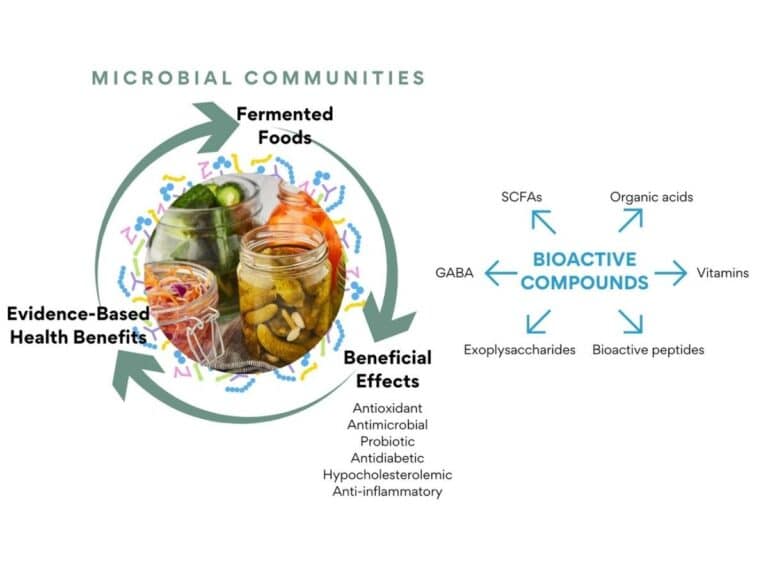
Now that you know about postbiotics, let’s talk about how to get more of them into your body naturally!
Foods with postbiotics and fermented options
Getting postbiotics is easier than you might think. Many fermented foods already contain them. Try adding these to your meals:
- Dairy items like kefir, yogurt, and cottage cheese
- Fermented vegetables such as pickles, kimchi, and sauerkraut
- Kombucha, miso, tempeh, and buttermilk
These foods contain both live bacteria and inactive bacterial cells that provide health benefits.
Prebiotic-rich foods that fuel postbiotic production
First off, remember this simple chain: prebiotics feed probiotics, which then create postbiotics!
To boost your body’s own postbiotic factory, eat more fiber-rich foods like:
-
Oats and flaxseed
-
Garlic and onions
-
Artichokes, asparagus, and cabbage
-
Bananas, apples, and berries
These high-fiber foods act as fuel for your gut bacteria, helping them make more postbiotics naturally.
Conclusion
Postbiotics might be the newest member of the gut health family, but they certainly pack a powerful punch. Throughout this article, we’ve seen how these inactive bacterial compounds offer many of the same benefits as probiotics without needing to be alive.
Your gut health affects nearly every part of your body. Postbiotics help strengthen your gut lining, fight inflammation, and boost how well you absorb nutrients. They also support your immune system and might even help with skin problems like eczema.
One big advantage of postbiotics stands out – they’re generally safer than probiotics, especially for people with weak immune systems. Their stability and longer shelf life make them practical for everyday use.
Getting more postbiotics doesn’t have to be complicated. You can start by adding fermented foods like yogurt, kimchi, and kombucha to your meals. Eating fiber-rich foods also helps your body make its own postbiotics naturally.
Remember that your lifestyle matters too. Water, exercise, time outdoors, and good sleep all work together to create a healthy gut environment.
The science behind postbiotics continues to grow. While they may not be as well-known as prebiotics and probiotics yet, these powerful compounds deserve a place in your gut health toolkit. Your future self will thank you for paying attention to this exciting discovery in gut health science today!
Citations
- https://www.healthspan.co.uk/guides/how-do-postbiotics-help-gut-health/?srsltid=AfmBOorkPG3COO5GJ07H-VhNCT0uye1-gQ4jUK-Pl9ksxxuX_OqAe7Nj
- https://pmc.ncbi.nlm.nih.gov/articles/PMC7468815/
- https://pmc.ncbi.nlm.nih.gov/articles/PMC10933997/
- https://khni.kerry.com/news/immune-health/postbiotics-what-are-they-and-how-are-they-different-from-other-biotics/
- https://www.nature.com/articles/s41538-022-00169-9
- https://www.uclahealth.org/news/article/lifestyle-changes-helpful-gut-microbiome
- https://www.health.harvard.edu/staying-healthy/5-simple-ways-to-improve-gut-health
- https://onlinelibrary.wiley.com/doi/full/10.1002/efd2.180
- https://www.tandfonline.com/doi/full/10.1080/09540105.2024.2434463
- https://mymodernmedicine.com/the-power-of-postbiotics-the-next-frontier-in-gut-health/?srsltid=AfmBOopc2M_MgtLONwD5j4QmCelkybR11Q8BFSmF03kSTKpXHkVwF5fY
- https://www.sciencedirect.com/science/article/pii/S0037196320300044